Everest Basecamp & 3 Passes Trek, Nepal
Everest Basecamp + 3 Passes Trek in the Khumbu-Everest region of eastern Nepal
Dates: 21 March - 16 April 2017 (27 days total)
Start: Shivalaya, ~1,800 m
End: Phaplu/Salleri, ~2,300 m
Lowest elevation: ~1,500 m, at Dhudu Kosi River crossing near Nuthala
Highest elevation: 5,643 m (18,514 ft), at Kala Patthar
Temperature range: -10 to high 20's °C
Transport: Bus + legs only! :)
Resources for any trekker (shoutout to Traveloutset):
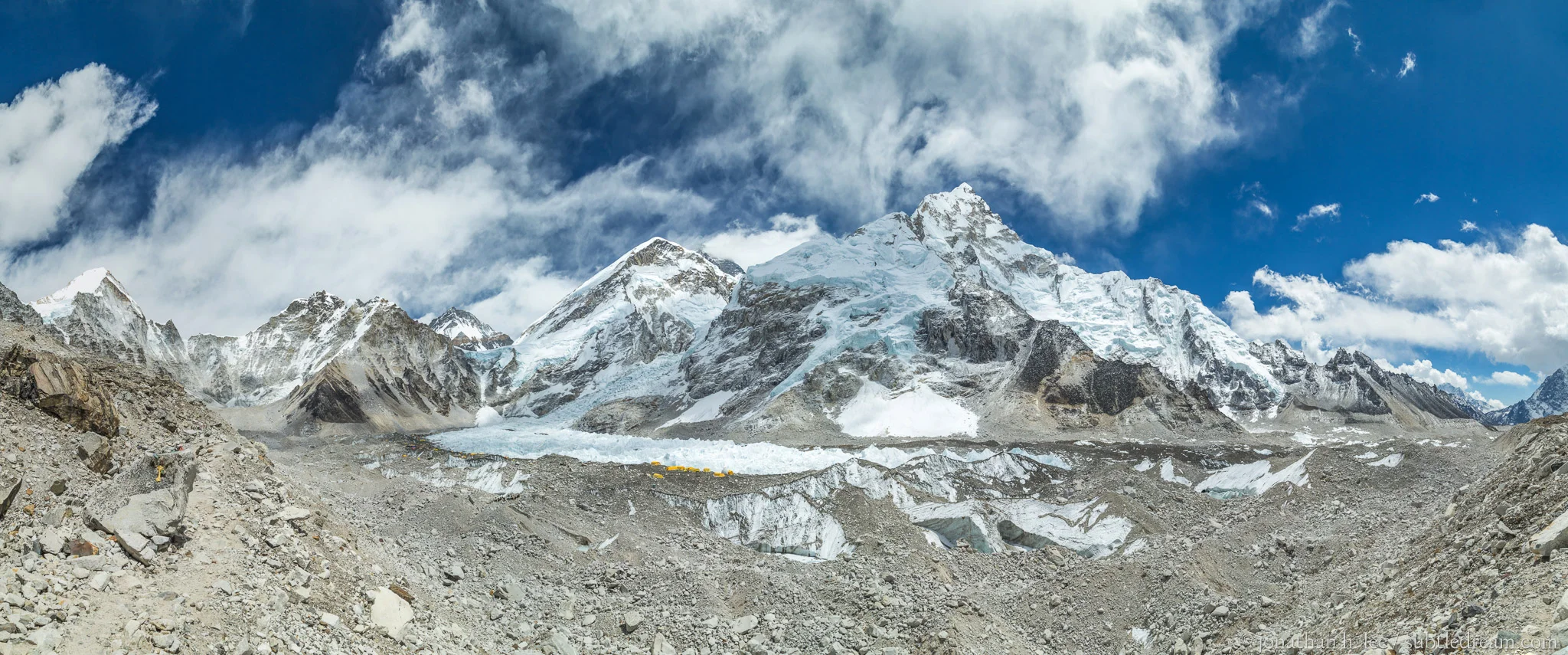
Everest basecamp (yellow/orange tents), Khumbu Glacier (behind basecamp), and Khumbu Icefall (above glacier). Nuptse in the background 7,861 m (25,791 ft) in the center-right. Everest slightly hidden behind the clouds in the middle-back.
Trekking Map (incomplete)
Gear

A snap of nearly everything minus the snacks before departure.
50L backpack
2L water bladder
1L water bottle
0.5L thermest - amazing for hot drinks
water purifier (Steripen Ultra)
water filter/pouch (Sawyer mini water filter)
sunglasses - so very crucial
regional trekking map - also rec'd: offline maps
Kindle
Down sleeping bag rated for -7C/19F
mini first-aid, sunblock, moisturizer, mini towel
Clothing & Footwear
(3) pairs of quick-dry undies
(2) pairs of wool socks
wool/fleece beanie
(2) fleece neck warmer/gaiter
fleece gloves
synthetic short sleeve
convertible quick-dry shirt
wool long sleeve base layer
quick-dry hiking shorts
full-length synthetic tights
rain jacket/shell
insulated jacket
light fleece sweater
lightweight windbreaker
quick-dry hiking pants
soft-shell pants
trail-running shoes - wore these most of the time at lower elevations and on mild days. more notes below
mid-top waterproof boots - too warm for low elev., primarily used them at 4000+ m. more notes below
full-length gaiters - see notes below
microspikes - see note below
Clothing/gear note: The retail $ damage on these pieces of gear would be nuts. The reason I was able to afford them is because I had worked in the outdoor industry and got everything heavily discounted while under their payroll, and the occasional thrift store gems! REI Garage Sales are awesome, too (sorry folks, they are only in the US). There are many low-priced outdoor gear shops in Kathmandu, Pokhara, and other trekking towns that carry replicas of North Face/Marmot/Mountain Hardwear/etc. base layers, jackets, pants, and accessories for ~20-50% the branded retail cost, and a good number (though certainly not all) of these products function very well, or even just as well as the real thing. That said, I've seen porters/guides/other trekkers hit the trail in the low valleys to high passes with simple shirts, jeans, flip flops, and everything in between. I don't believe there is a "correct way," though I do think there are certain materials to avoid to make the journey more comfortable and be ready for varying circumstances in weather. I'm fortunate to have solid gear that has kept me safe, warm (mostly), dry (again, mostly), and should likely last a long time. I also believe in Patagonia's environmental and social ethicacy and other companies' similar statements, and wish to support their work.
A water filter/purifer is highly recommended to minimize the chance of catching water-borne illnesses and eliminate the need for single-use plastic water bottles.
The trail-runners were great and I wore them for most of the trek. Even with temperatures dipping below freezing at high altitude and/or early mornings, with medium-weight wool socks and as long as I kept moving my feet stayed happy. The mid-top boots were welcomed at higher altitudes (4000+ meters), stream crossings, and trekking over ice/snow, and for some additional lateral support, but I am blessed with strong ankles and therefore didn't absolutely need them for this reason. Another benefit with wearing ventilated shoes - MUCH less stink. ;) It's more weight to carry 2 pairs but I felt prepared for the hugely varied and at times unpredictable conditions from 1500 - 5500+ meters.
I think gaiters and microspikes are optional depending on the time of the year and snowfall from previous season. My friends and I started in late March, which is considered early in the trekking season. Folks do trek all year in the region, though with the winter cold between Dec-Mar, much fewer people, including lodge/guesthouse owners, are at higher altitudes. We luckily had friends who had just returned from the region and told us that traction device and gaiters would be useful as they had gotten snowed-in at Gokyo (a seasonal town at 4790 m) for 2-3 days in the 2nd/3rd week of March. I would imagine later in April and May these 2 pieces of gear can be omitted to save space and weight. I couldn't speak for the rest of the year. There's always Namche Bazaar - the hub of the Khumbu-Everest region - to get the latest word on trail conditions and weather and to pick up supplies of all sorts.
Camera Equipment
Canon 6D
Samyang 14mm f/2.8 - so wide. also marketed as Pro Optic, Rokinon and Bower
Canon 24-105mm f/4L IS
Canon 100-400mm f/4.5-5.6L IS
Sirui T-025x tripod + Dolica WT-1003 monopod
GoPro Hero 5 Black
way too many extra batteries ;)
Additional notes: The focal length range was tremendous and made for nearly every type of shot possible. The quality from those zooms with the full-frame sensor is impressive, however the weight was undoubtedly on the heavier end. More than half my pack's weight was in camera gear and accessories. I would certainly consider a lighter setup (ie: 1 wide angle prime + 1 medium-range prime, like 85/100/135mm) or a mirrorless/micro 4/3rd's camera with an all-in-one + prime lens. The GoPro/monopod combo was great fun to have, and the tripod was essential for me to do night and long exposures as well as time-lapses.
Additional resources:
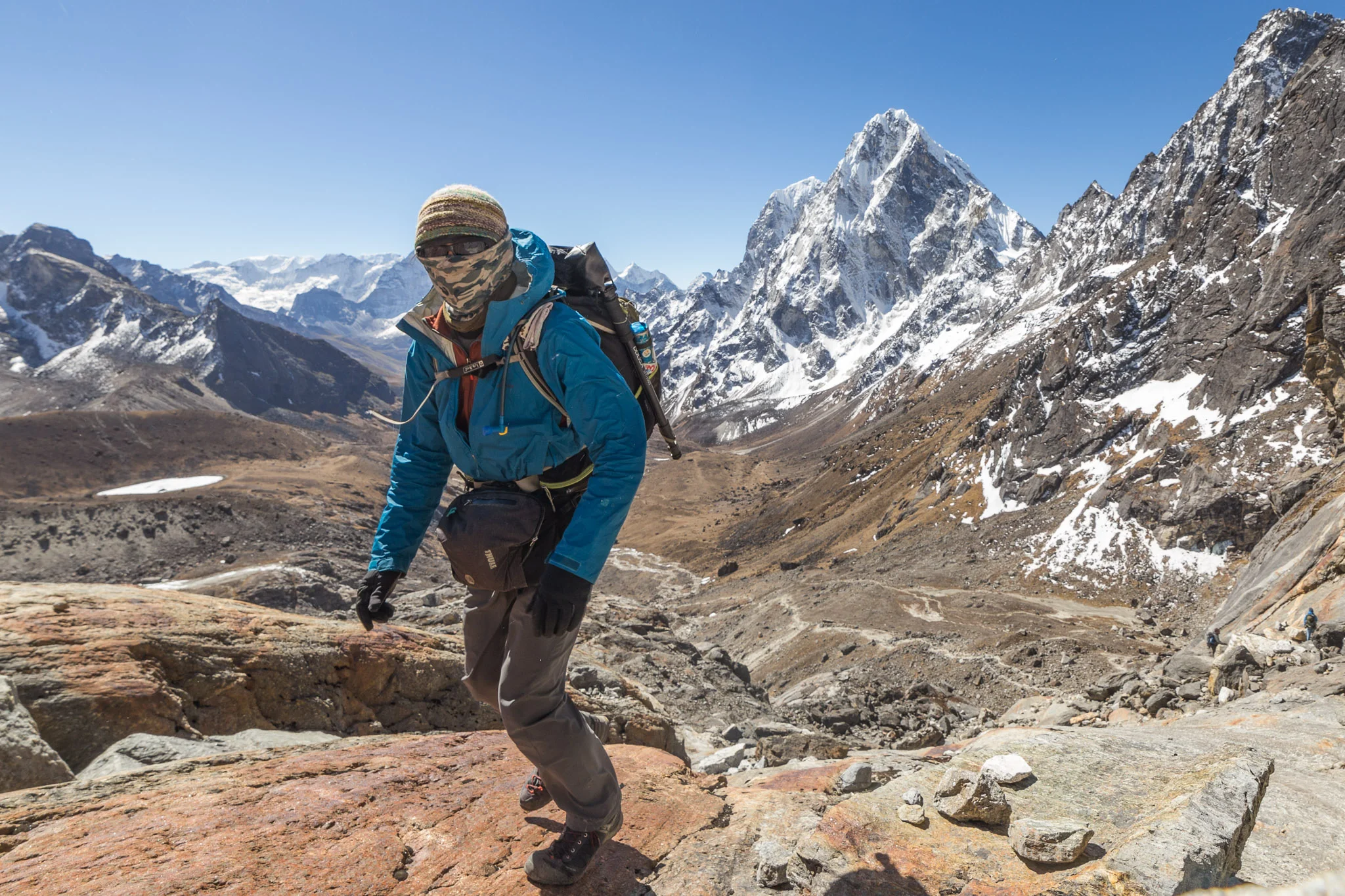
Looks like a tiny bag, but the weight was quite killer (especially with all the snacks) while ascending and at high elevation. Ascending towards the 2nd of the 3 Passes, Cho La (~5,370 m) from Zonglha, 6 April 2017.

Ama Dablam (6,812 m) rising into the sky behind tea-guesthouses in Pangboche (3,980 m) on 30 March, 2017.

Descending from Island Peak basecamp (~5,070 m) back to Chukhung (~4,800 m) as a wet rain/snow mixture was falling on 2 April, 2017.

Walking thorugh the Khumbu glacier just outside Everest Basecamp (~5,300 m) on 4 April, 2017.

Dawn hike up to Kala Patthar (~5,600 m) from Gorakshep (~5,150 m) on 5 April, 2017.

View from Kala Patthar (~5,600 m) a minute before the sun peeks out behind Everest (dark tall peak on the right) iteself. 5 April, 2017.

One of the Gokyo lakes half way up Gokyo Ri on 8 April, 2017.
Thriving in the broken landscape, living in SOILdarity [TEDx talk]
Several weeks back when I was in Barcelona and feeling the weight of the issues of our world crush down on my mind, I wrote a post with some of those thoughts. A number of you read it and responded, and I was thrilled to have received a number of heartfelt replies and words of encouragement. When I was in Los Angeles briefly in June I visited a good friend Ryan Serrano and caught up with life. One of the many things mentioned was keeping up the good work admist seemingly a sea of apathy and massive consumerism.
Ryan calls it "well-informed futility syndrome, a condition of anxiety that comes from knowing about the world's problems and wanting to fix them but feeling helpless and overwhelmed against the cultural and economic patterns that create them in the first place."
I am blessed to have walked this journey in the past several years with countless individuals who continue to lift their heads and carry the light with them as they show others the light and the joy that we all have within.
This TEDx talk is one of the brightest beacons of light I have come across in recent times. Take the time to re-energize yourself with my brother Ryan's words and perspective.
PLUG: if you are in southern California and in search of ecological landscaping advice, give Ryan a holla through his business via Earth Steward Ecology.
#MoreThanATree Campaign
I am late to the #MoreThanATree campaign, but folks ought to know about this, so here's my post.
As the videography and editor of this piece, I can tell you this campaign really, truly is much more than just a (coffee) tree (or 10,000!). This represents Conscious Impact's original commitment and intent in the village of Takure - a long-term vision and solution that is in-line with the community members' point of view. Narayan Bhattarai, a Takure local and a walking encyclopedia of local plants and all-things agriculture (and more), is our amazing community liaison and a dear friend since the inception of the project. Together with the agriculture team, we have taken part in many conversations and plannings in working to this point - the joining of an existing coffee growing cooperative that guarantees buyers at a fixed rate. What does this mean? It signifies that farmers who are part of this co-op can sell their harvest coffee beans at a rate that would bring in considerable income for his/herself and their families. What other benefits are there, you may ask? Good question! Since coffee trees enjoy being in the shade, part of coffee planting means also planting canopy trees which will tower over the coffee. For this we will put in the ground native and other fruit/food-bearing trees that will not only provide shade, but also food for humans, birds, and other fauna will be attracted to his multi-layer habitat, just as a natural and healthy-functioning ecosystem would. Another added bonus: more trees and a restored natural habitat = less erosion, and that's definitely a good thing in these deforested hillsides battered with heavy monsoon rains every summer.
With that said, and having watched these coffee saplings grow from sprouts 13 months ago to their height now, the evolution of the agriculture program and its potential to really make a positive impact on regional community members ecologically and financially, I am beyond pleased to have cut this together to fund a project that I believe in personally. Big, big thanks to Sunita Pandey and Alyson Noele Sagala in translating our interviews throughout the Spring season, while the ag team consisting of Bryce Geralynn Tanner, Greg Robinson, Narayan Bhattarai, Jose Whelan, and Renée Dyke certainly deserve a round of applause for their dedication and (ongoing) work in making this a reality. We are at 44% or so now and I don't see why we cannot hit 100% before the summer's end. Big thanks to all who have supported us so far!
Ready to pitch in?
Campaign fundraiser link: https://www.classy.org/campaign/more-than-a-tree/c118678
Want to know more?
- "The Formation of a Coffee Cooperative ": https://www.consciousimpact.org/…/the-formation-of-a-coffee…
- "Meet Buddha: A Farmer Using Permaculture in Nepal": https://www.consciousimpact.org/…/meet-buddha-a-tree-farmer…
- "Meet Durga: A Woman Farmer in Takure": https://www.consciousimpact.org/…/meet-durga-a-woman-farmer…
- "Meet Shyam: A Coffee Farmer from Nepal": https://www.consciousimpact.org/new-blog/meet-shyam
Vimeo video link (to share with those not only on Facebook): https://vimeo.com/consciousimpact/morethanatree
See more on Conscious Impact's Facebook page, Instagram @ConsciousImpact #MoreThanATree, and of course our website www.consciousimpact.org
PS: Gratitude to Rebeca Segal for photographing alongside yours truly, and to the musical talents Scott Hanson, Iftach Yaya Meir, and Chris Mains for the sublime soundtrack!
Meet Durga: A Woman Farmer in Takure
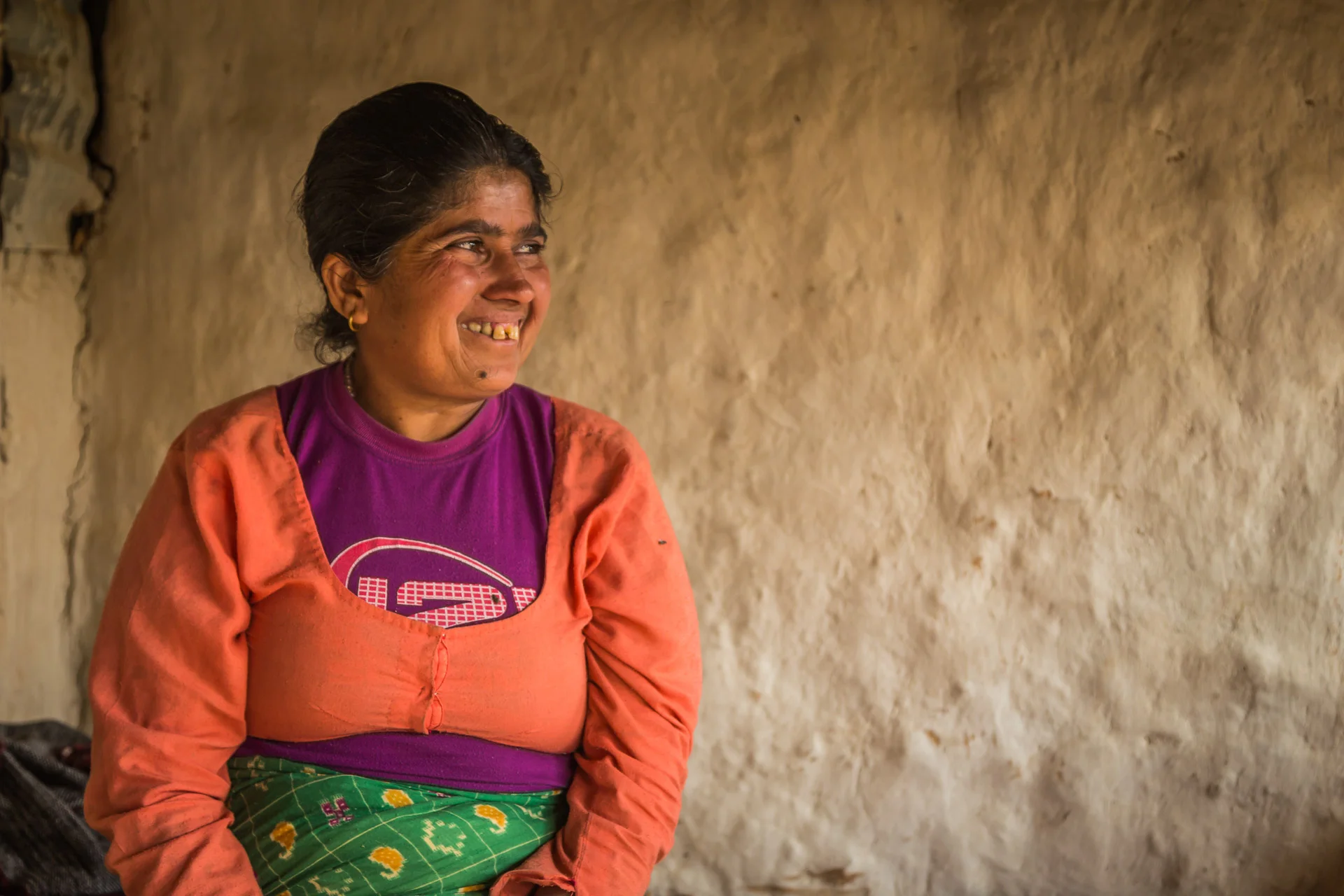
Meet Durga Koirala. She is a female farmer from Takure raising six children on her own. After her husband passed away Durga took on the role of farming and supporting her family. In her interview she talks about the challenges of farming in Takure, and the difficulties she faces every day. She's an amazing mother and farmer, we're so grateful to have had the opportunity to sit down with her. Follow the link to read the full interview: https://www.consciousimpact.org/new-blog/2017/6/8/meet-durga-a-woman-farmer-in-takure
Photos and filming by yours truly. Interview and translations by Bryce Tanner, Sunita Pandey, and Alyson Sagala.
How strange it feels...
How strange it feels, to be alive and well, spending time in one of the most popular and picturesque destinations in Europe, yet be aware of the colossal amount of tragic events, ignorance, and sorrow in the world with a Trump America, a war-torn Syria with millions displaced, griefing and anger over the Manchester inicident, post and neo-colonial Africa and Latin America and with that centuries of implications, erosion of indigenous peoples' rights and voices, regions which still haven't recovered from the financial crunch of '07 and' 08, climate change-induced droughts, floods, and subsequently, the beginning of an era of climate refugees and water wars -- and here I am, enjoying the almost-summer breezes, sangria, tapas, sweets, and sunshine of Barcelona while paying a whooping €15 to see a "donation-based" cathedral that was started in the 1880s and will not be complete until 2026 (extremely magnificent structure, don't get me wrong, however I'm thinking what that quantity of money and energy could have been dedicated to instead). I find myself often surrounded by folks who will take 10+ selfies to get that one shot to look cute/cool/radical to their friends/followers whilst not particularly paying attention to where they actually are and the significance that surrounds them. I see shoppers who drop hundreds upon thousands of dollars-euros to temporarily satisfy their superficial material fix, only to return for more. As asthetically beautiful, full of history and vibrant arts, I've been reminded a number of times that I am back in this part of the western world where excess has driven and continues to drive these cities and society. I can't say I am surprised, yet I've found myself in a dilemma that I haven't felt this strongly since being in Japan back in November. I feel disgusted. I feel let down by humanity. I feel that I cannot be on the same team as these fellow humans who seemingly have little to no awareness of their actions and the happenings around our shared world, which as we go deeper and deeper into the technology and information age, ignorance to me becomes a choice rather than not. I feel the impending doom hitting as we keep riding these cruise ships on fossil fuels as the sea levels continue to rise, flooding homes and displacing people we don't know and don't care to know while we tell ourselves YOLO (You Only Live Once) so I deserve to spend and do what I earn so STFU (Shut The F Up) but hey here's $10 on Kickstarter for your non-profit phew my soul is cleansed and karma will bring me the goodies for lyfe! That same time when I got hit by this wall, this blatant culture of excess and ignorance, I started a long personal post about a related climate change dream that I had had the night prior. I never quite finished it as I got deeply concerned about humanity and my own mental well-being as the words came out. Despite being my last evening in Barcelona tonight I made the decision to stay in after picking up some fruit and empanadas from the store around dinner time. I needed this time to reflect and process it all -- how do I continue to keep my head up and fight the good fight? Where do I continue to draw motivation to move forward in these turbulent times? What is my greater contributions and what positive impact have I and am still creating? Where do I go from here as I wrap up my 14 months being away from "home"? Is what is geopolitically considered the US even home? Who can I collaborate, live, thrive, and be with to allow myself to be myself and co-create the best that I and we can be? Thank goodness for the good people that you do meet and hear about. Just earlier this afternoon I went to check out a co-working space in the middle of Barcelona where an Italian couple who has been living here for several years do a weekly donation-based luncheon for anyone and everyone with mostly rescued foods and groceries from nearby stores and markets. Apparently the food waste movement started in this city a little while ago and now there are grassroots groups dedicated to picking up what would otherwise be thrown away due to arbitrary "expiration" dates. Phew. I needed to meet them and know that. But I do wonder and think... how strange it feels to feel lonely amidst so many.
A quote by Narayan Bhattarai
"The benefits we receive as individuals are not large. We are not taking any things with us, yet we try to earn so much to have sufficient things. We come into this world with empty hands, live in nature, step on this earth, breathe the air, drink the water, get warmth from fire. And when we die, we leave empty handed. We reach again the water, and are burned by the flame, mixing our soul back into the fire. We take only the satisfaction that we drew from our own lives, and the thoughts that others had of us, when we die.” - 'Mama' Narayan Bhattarai, with translations by Sunita Pandey and Alyson Noele Sagala
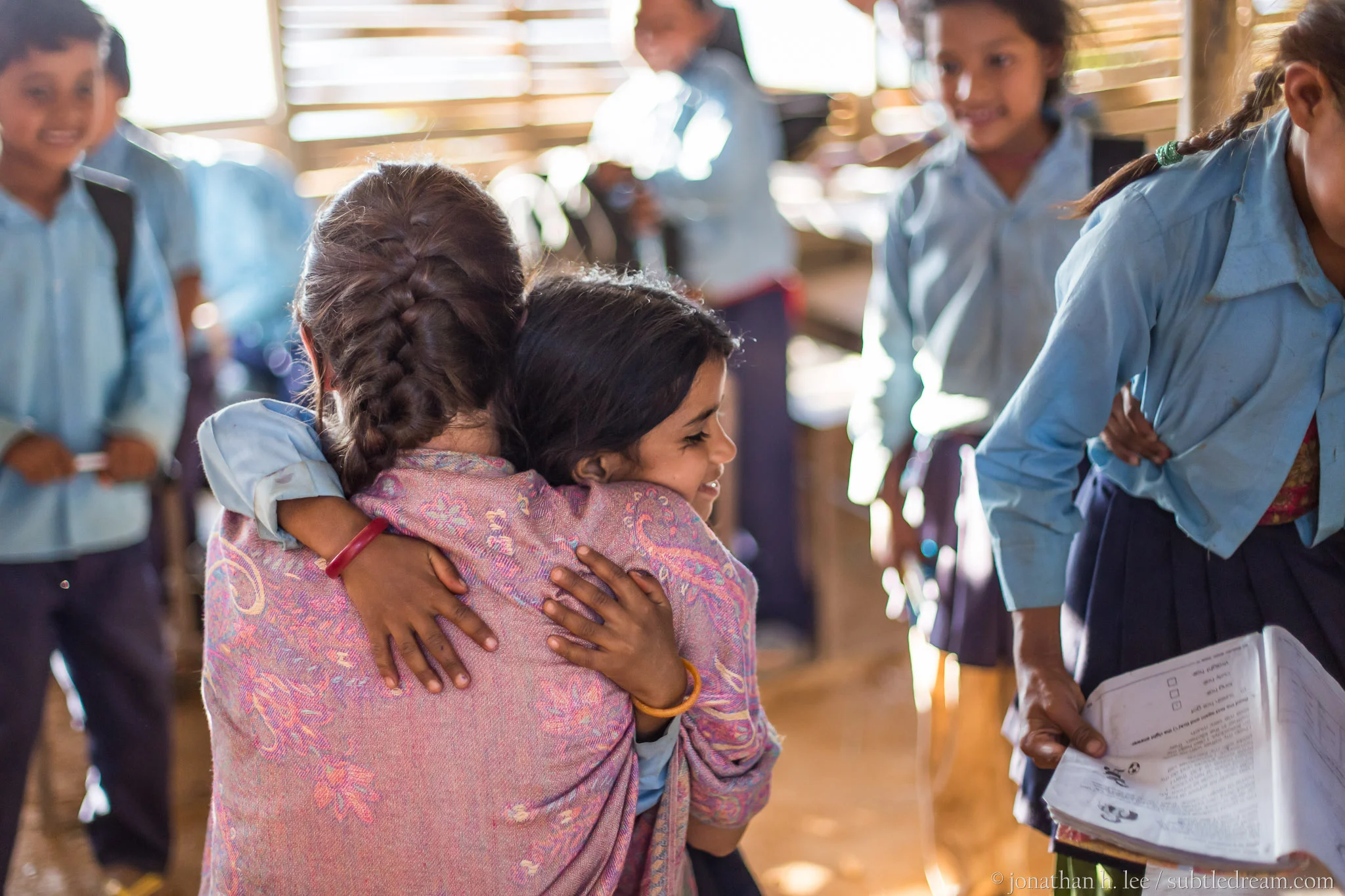
Live at the Museum of Art in TLV!
Live at the Museum of Art in Tel Aviv, Israel! Conscious Impact representing at the exhibition named "Constructive Responses to Natural Disasters" with the organizational video that I have filmed and cut together a few months back. Big to museum curator Maya Vinitsky in working with us and putting all of it together so beautifully and gracefully!